TESE and PESA: sperm retrieval for azoospermia and after a vasectomy
TESE and PESA are surgical methods for retrieving sperm directly from the testicle or the epididymis when a semen sample contains no sperm. Both procedures are done under local anaesthetic, and the sperm is then used for IVF with microinjection (ICSI).
Being told that your semen sample contains no sperm can come as a shock. Many men first feel that the road to having their own children is closed, but for most men that is not the case. When sperm does not come out in the semen, it often means it is still being produced in the testicle but cannot find its way out. We can then retrieve it directly. This page explains how TESE and PESA are done, who the methods are suited for, what to expect afterwards, and what the treatment costs as part of IVF treatment at Klinikk Hausken.
TESE and PESA retrieve sperm directly from the testicle or epididymis when a semen sample contains no sperm (azoospermia).
The methods are often used after a vasectomy or when the sperm ducts are blocked, where sperm production is normal but transport is obstructed.
The procedure is done under local anaesthetic as a day procedure, and most men are back to light activity within a few days.
When sperm production is normal, we find sperm in most men. The sperm is used for IVF with ICSI.
Diagnostic PESA/TESE costs NOK 7,500 at Klinikk Hausken, and sperm can be frozen for later attempts.
What are TESE and PESA?
TESE and PESA are two forms of surgical sperm retrieval. What they have in common is that sperm is taken directly from the testicle or the epididymis rather than from the semen. The condition in which a semen sample contains no sperm is called azoospermia, and it is found in 10–15% of men investigated for infertility.
Sperm retrieved by TESE or PESA cannot fertilise an egg on its own. It is therefore always used together with ICSI at Klinikk Hausken, where the embryologist injects a single sperm directly into each egg.
PESA: sperm retrieval from the epididymis
PESA stands for Percutaneous Epididymal Sperm Aspiration. With PESA, a local anaesthetic is given and the doctor passes a thin needle through the skin of the scrotum into the epididymis. A little fluid is drawn out and sent straight to the laboratory, where an embryologist looks for live sperm under the microscope. PESA is done without a skin incision and is the least invasive option. It is often the first choice for obstructive azoospermia.
TESE: sperm retrieval from the testicle
TESE stands for Testicular Sperm Extraction. PESA draws fluid from the epididymis, while TESE takes a small tissue biopsy from the testicle itself. After a local anaesthetic, a small opening is made in the skin and a small piece of testicular tissue is removed. The embryologist carefully separates the tissue and looks for sperm under the microscope. TESE is used when PESA does not produce sperm or when the doctor judges that taking tissue is more appropriate.
TESA and MESA: related methods
You may also come across the terms TESA and MESA. TESA (Testicular Sperm Aspiration) retrieves testicular tissue using a needle and aspiration, unlike TESE, where the tissue is taken as a biopsy. Many prefer TESA because it causes less tissue damage than TESE, and therefore less pain afterwards. MESA (Microsurgical Epididymal Sperm Aspiration) is microsurgical retrieval from the epididymis. Which method is chosen is decided individually, based on your assessment. An umbrella term for all the methods is surgical sperm retrieval, also called operative sperm retrieval.
Can sperm be retrieved after a vasectomy?
Yes. A vasectomy (male sterilisation) is one of the most common reasons men need surgical sperm retrieval. In a vasectomy the sperm ducts (vas deferens) are cut, but the testicles keep producing sperm as normal. The sperm simply cannot get out because the route is closed. This is called obstructive azoospermia: production is fine, but the way out is blocked.
If you have had a vasectomy and want children, PESA or TESE is an alternative to reversing the vasectomy. PESA is the first choice; if we do not find sperm with PESA, we go on to TESA or TESE. Instead of a new operation on the sperm ducts, we retrieve the sperm directly and use it for IVF. The same applies to other causes of blocked or missing sperm ducts, such as being born without sperm ducts or a blockage after an infection.
When production in the testicle is normal, as it almost always is after a vasectomy, the chance of finding usable sperm is close to 100%.
Who are TESE and PESA suitable for?
TESE and PESA are an option for men who have no sperm in their semen sample. Before treatment, azoospermia is confirmed with at least two semen samples. There are two main types:
Obstructive azoospermia. Sperm production is normal, but transport is obstructed. Typical causes are a vasectomy, being born without sperm ducts and a blockage after an infection. This is the situation this page is about, and where PESA and conventional TESE belong.
Non-obstructive azoospermia. Sperm production itself is reduced or absent. The picture is then different, and a more advanced method is used. You can read about micro-TESE for non-obstructive azoospermia on a separate page.
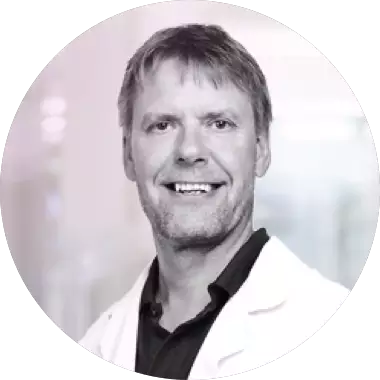
Which type of azoospermia you have is established during the assessment, including with hormone tests and ultrasound. At Klinikk Hausken, surgical sperm retrieval is performed by experienced specialists, and the clinic is an approved provider of assisted reproduction. Dr Arne Schwennicke at our Stavanger clinic has extensive experience of surgical sperm retrieval.
How the treatment works
TESE and PESA are done as a day procedure. You are awake during the procedure, but the area is well numbed, and you go home the same day.
Before the procedure: assessment and preparation
Before treatment you have an assessment of male fertility. It usually starts with the Fertility Check, your first appointment with us. The further assessment usually includes at least two semen samples confirming azoospermia, a clinical examination, hormone tests and often an ultrasound of the scrotum. In some cases genetic testing is also recommended. The assessment shows whether the azoospermia is obstructive or non-obstructive, which matters for the choice of method.
The retrieval itself is often planned around the same time as your partner's egg retrieval, so that fresh sperm can be used for ICSI straight away. You can see the whole process on the page about IVF treatment step by step. Alternatively, a diagnostic retrieval is done in advance and the sperm is frozen for later use. You will receive specific instructions with your appointment letter, including on blood-thinning medicines and practical preparations.
During the procedure
The procedure starts with a local anaesthetic around the spermatic cord and in the skin of the scrotum. Once the anaesthetic has taken effect, the doctor passes a thin needle into the epididymis (PESA) or takes a small tissue biopsy from the testicle (TESE). The material goes straight to the laboratory, where the embryologist looks for live sperm while you are still at the clinic. The retrieval itself usually takes 15–30 minutes. Most men describe it as pressure and mild discomfort rather than sharp pain.
After the procedure: pain and recovery
After the procedure you rest for a short while at the clinic before going home. Tenderness and some swelling of the scrotum are common for the first few days, and some men get bruising. Most manage with paracetamol, possibly with an anti-inflammatory as well, for a few days. PESA usually causes less discomfort than TESE because no skin incision is made.
Light activity such as gentle walking and office work is usually possible after one to two days. Avoid heavy lifting, hard exercise and sex for the first week, so the area can heal in peace. Contact the clinic if you have severe or increasing pain, significant swelling or a fever, which can be signs of bleeding or infection.
First step
The Fertility Check
An appointment that tells you where you stand and what the next step is. No referral from your GP needed.
How likely it is to find usable sperm depends on the cause of the azoospermia. In obstructive azoospermia, where production is normal but transport is blocked, we find sperm in almost all men. This applies, for example, to men who have had a vasectomy.
Once sperm has been found, the results are good. In a Norwegian study, the pregnancy rate in IVF with surgically retrieved sperm was on a par with ICSI using sperm from an ordinary semen sample. The Norwegian Institute of Public Health has also found no evidence of an increased risk of birth defects with ICSI using sperm taken from the testicle or epididymis.
In non-obstructive azoospermia, where production itself fails, the chance of finding sperm is lower and less certain. TESA or TESE is then used, or micro-TESE when production is thought to be very low. Whatever the outcome, we go through your situation with you in advance, so that you know what is realistic before the procedure.
Possible complications and side effects
TESE and PESA are considered minor procedures with low risk. The most common problems are mild and temporary:
Bruising and swelling of the scrotum
Tenderness and mild to moderate pain for the first few days
Slight bleeding from the needle site or incision
Less often, a larger collection of blood (haematoma) or an infection that needs treatment can occur. In a Norwegian study, haematoma was rare, occurring in about 5 in 100 procedures. Correctly performed procedures have shown no negative effect on hormone production or testicular volume. Contact the clinic if you have severe or increasing pain after two to four days, significant swelling or a fever.
How much do TESE and PESA cost at Klinikk Hausken?
At Klinikk Hausken, diagnostic PESA/TESE costs NOK 7,500. PESA/TESE performed as part of a treatment cycle costs NOK 5,100. If we find sperm, it can be frozen for later attempts, so you avoid another procedure. Freezing sperm or testicular tissue costs NOK 4,200.
The prices cover the sperm retrieval itself and come in addition to the cost of the IVF treatment. You can find all prices in the full price list.
Yes. After a vasectomy the testicles still produce sperm, but the sperm ducts have been cut so the sperm cannot get out. With PESA or TESE we retrieve the sperm directly, as an alternative to reversing the vasectomy. The chance of finding sperm is very high.
All three are ways of retrieving sperm directly from the man. PESA draws fluid from the epididymis with a thin needle. TESA is needle aspiration from the testicle. TESE takes a small tissue biopsy from the testicle. The choice depends on the cause of the azoospermia and on what the assessment shows.
The procedure is done under local anaesthetic, and most men mainly feel a sting when the anaesthetic is given, then pressure and some discomfort. Afterwards, tenderness and some swelling of the scrotum for a few days are common. Paracetamol is usually enough. TESE causes slightly more discomfort than PESA.
In obstructive azoospermia we find sperm in almost all men. In non-obstructive azoospermia there is a real possibility that we will not find any usable sperm. We prepare you for this in advance and go through the alternatives, including donor sperm, so that you can make an informed choice about the way forward.
Yes. If we find sperm, we often recommend freezing some of it. It can then be used in later IVF attempts without another procedure. Freezing sperm or testicular tissue costs NOK 4,200 at Klinikk Hausken.
Micro-TESE is a more advanced form of TESE in which the surgeon uses an operating microscope to look for sperm in the testicular tissue. It is used for non-obstructive azoospermia, especially when production is thought to be very low, typically with smaller testicles or raised FSH and low testosterone. You can read more on the page about micro-TESE for non-obstructive azoospermia.
Find an appointment
Select your clinic and the reason for your visit to see the first available appointments. Once you have selected a time, you can request a callback from us to confirm it, or book it yourself via Helseboka using BankID.
Klinikk
Hva gjelder det?
Henter ledige timer …
Hvordan vil du bestille?
Neste steg i Helseboka: Velg den samme timen og bekreft med BankID. Timen er bestilt når du får SMS fra Helseboka.